



For years, our interaction with artificial intelligence remained trapped within the limits of a chatbox. We provided a prompt and the system provided a response. This relationship was transactional and required constant human management to move projects forward. 2026 has officially broken that cycle by introducing the era of Agentic AI. This shift represents a fundamental move from passive assistants to autonomous digital coworkers that do more than talk. They execute.
Agentic AI in 2026 is defined by the ability to pursue complex goals without step by step instructions. While previous models acted as creative mirrors, modern agents act as proactive executors. They plan their own paths, use external tools, and correct their own errors. This transition transforms AI from a simple software tool into a functional member of your digital workforce.
Why 2026 is the Year of the Agentic AI
The current technological landscape is no longer about who has the smartest model. It is about who has the most capable agents. Several key advancements have made this possible in 2026. Models now possess long context reasoning, which allows them to remember goals over weeks rather than minutes. Organizations are moving away from single chatbots and toward multi agent systems where specialized agents collaborate to solve business problems.
The industry calls this the industrialization of agency. We are seeing a second ChatGPT moment where the focus shifts from generating text to generating outcomes. At Legacy Productions, we recognize that this is the most significant change in how humans interact with computers since the invention of the graphical user interface. You are no longer just a user of technology. You are now a supervisor of autonomous systems.
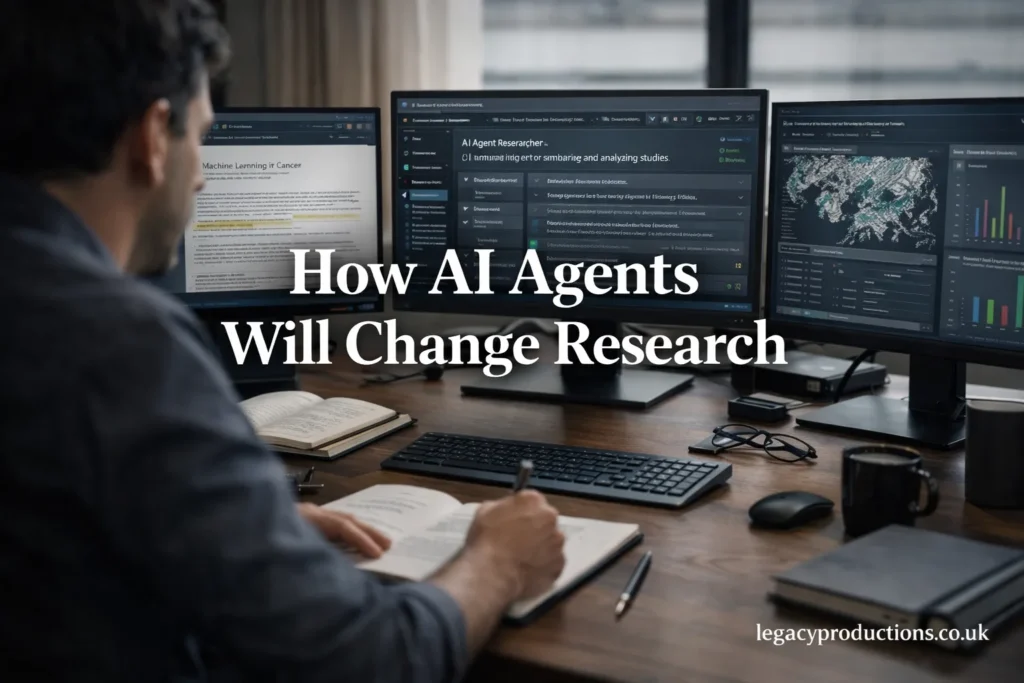
Beyond Keywords: How AI Agents Will Change Research
Modern research in 2026 has moved far beyond simple search queries. Digital agents no longer just browse the web for links. They actively synthesize information from massive data sets in a single workflow. These agents have the capability to read private PDF libraries and scan live web pages while simultaneously querying academic databases. This multi step reasoning allows for a level of depth that was previously impossible for a human researcher to achieve in such a short timeframe.
Reliability is the cornerstone of these systems. 2026 models utilize verification loops to solve the problem of AI hallucinations. Before presenting a fact, an agent will cross reference that information across multiple independent sources. This makes the technology a dependable partner for technical fields like law, medicine, and engineering. Once the research is complete, the agent integrates the findings directly into your existing workflow. It can generate a formatted report or create a professional slide deck with all the necessary citations already included.
The Most Influential AI Agents Defining the Agentic Era in 2026
These AI agents represent the shift from passive chat-based assistants to autonomous digital workers. Each system below is designed to plan, execute, verify, and adapt without continuous human supervision.
| AI Agent | Primary Role | Why It Matters in 2026 | Best Fit Use Case |
|---|---|---|---|
|
AutoGPT Enterprise
Autonomous Execution
|
Goal-oriented task execution | Operates independently across multi-step objectives, choosing tools, validating outputs, and adjusting strategy without constant prompts. | Research automation, operations workflows, internal AI teams. |
|
OpenAI Operator
Action Agent
|
System and browser interaction | Completes real-world tasks inside software interfaces and adapts to UI changes, making it more than a conversational assistant. | Admin work, SaaS management, process automation. |
|
Vanta AI Agent
Compliance Automation
|
Security & trust documentation | Links every response to verified internal evidence, dramatically reducing audit time and enterprise sales friction. | SOC 2, ISO, enterprise security reviews. |
|
AutoRFP.ai
Revenue Enablement
|
RFP and questionnaire automation | Uses trust scoring and historical data to generate accurate, review-ready responses at scale. | High-volume B2B sales teams. |
|
Superhuman AI
Inbox Intelligence
|
Email triage and drafting | Understands intent instead of keywords and prepares responses in the user’s personal voice before they open their inbox. | Executives, founders, operators. |
|
n8n Agent Workflows
No-Code Agents
|
Multi-agent orchestration | Allows non-technical users to design autonomous systems that plan, act, and iterate inside defined boundaries. | Custom AI workflows, internal tooling. |
From Triage to Action: How to Use an Agentic AI to Sort Emails
Email management is no longer a manual chore. The 2026 Quiet Inbox framework relies on semantic scoring to keep you focused. Instead of looking for keywords, agents analyze the underlying intent of every message. An agent identifies whether a sender is asking for a meeting, requesting a file, or simply providing information. This allows the system to prioritize your inbox based on the actual value of the communication.
The process works through a two stage system of delegation. The Triage Agent handles the initial organization by moving mail into specific folders such as Urgent or Archive. Immediately after, the Drafter Agent takes over. This agent uses your historical communication data to write responses that mirror your personal voice. By the time you open your inbox, 90% of your replies are already prepared for your review. Tools like Superhuman AI and Shortwave have pioneered these autonomous ghostwriting features. They allow professionals to maintain high responsiveness without spending hours typing every day.
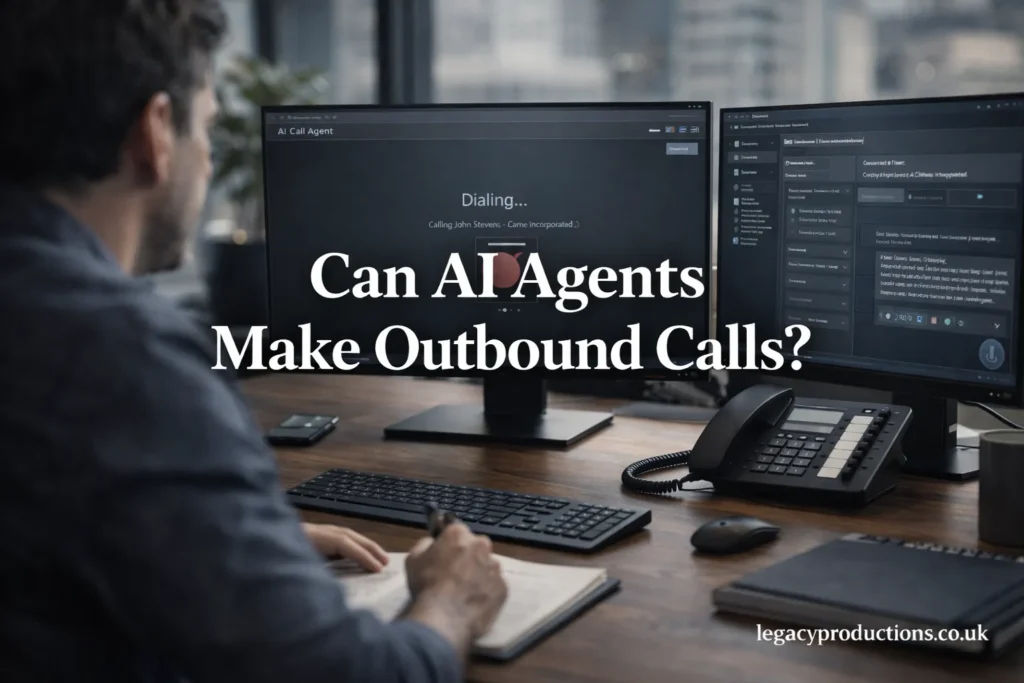
The Voice Revolution: Can AI Agents Make Outbound Calls?
The answer in 2026 is a definitive yes. AI agents have evolved to handle complex outbound calling tasks that once required a full call center. These agents manage everything from simple appointment reminders to sophisticated sales prospecting. They speak with natural intonation and can respond to unexpected questions in real time. This capability provides a massive scaling advantage for small businesses that need to maintain active outreach.
Regulation has kept pace with these technological leaps. In the UK, Ofcom has established strict guidelines to protect consumers. Both the UK and the US now require prior express written consent before an agent can initiate a call. Transparency is a legal requirement. Agents must identify themselves as AI systems immediately. To maintain trust and quality, the most effective 2026 systems use human in the loop guardrails. A human supervisor monitors the agent and can step in during high stakes negotiations to ensure the best possible outcome.
Real Estate 3.0: How Can Real Estate Agents Use AI?
The property market has embraced agentic technology to remove friction from transactions. Predictive matching is one of the most powerful tools available to real estate professionals today. Agents analyze buyer behavior and local market trends to identify perfect property matches before a client even starts their search. This foresight allows realtors to provide a highly personalized service that feels intuitive to the buyer.
Customer service in real estate has also become a 24/7 operation. Virtual receptionists handle every initial inquiry and can schedule property viewings without any human intervention. This ensures that no lead is ever lost due to a slow response. Furthermore, agents now use AI to automate the creation of hyper local content. This includes generating material information disclosures and local area reports that meet 2026 compliance standards. These tools handle the administrative burden so that human agents can focus on closing deals.
Enterprise Trust: Who Has the Best AI Agent for Security Questionnaires?
The manual burden of security audits was a major bottleneck for B2B companies until 2026. Dealing with a 200 question questionnaire used to take weeks. Today, specialized agents have turned this into a 24 hour process. Companies like Vanta and Drata lead the market by providing policy anchored responses. These agents link every answer to live evidence within your company’s security systems, which ensures total accuracy and audit readiness.
Other leaders in the space include AutoRFP.ai and Conveyor. AutoRFP.ai is the preferred choice for high volume drafting. It uses a TrustScore system to verify every answer before a human sees it. Conveyor excels at completing questionnaires directly inside third party portals and handles mixed file types with ease. The primary benefit for businesses is speed. Faster security approvals mean faster contract signings and more revenue.
A Practical Guide to Building AI Agents
You do not need to be a developer to build an AI agent in 2026. No code orchestration platforms like n8n and Zapier Central have made this technology accessible to everyone. Users can create agentic loops by simply connecting their favorite apps and setting a goal. These platforms allow you to build a system that thinks and acts on its own within the boundaries you set.
Success depends on how you define the agent’s persona. A clear system prompt is essential for providing the agent with its mission and rules. You must also grant it access to specific tools through MCP servers so it can interact with the world. The final step is a testing and iteration phase. You should use a watch and learn approach for the first 50 actions. Once the agent proves its reliability, you can grant it full autonomy to manage your workflows.
Conclusion: Your New Digital Workforce
The landscape of 2026 is no longer about learning how to type faster or use better search terms. It is about learning how to delegate effectively. AI automation has moved from simple task completion to full scale agency. By using these digital coworkers, you can scale your individual output to levels that were previously only possible for large teams.
Legacy Productions sees this as the most significant shift in human computer interaction since the smartphone. We are witnessing the birth of a new digital workforce that operates around the clock. Your success in this new era depends on your ability to supervise these systems rather than doing the manual labor yourself. The era of the agent is here. It is time to start building your own.
Watch: Key Concepts Explained Visually
This video breaks down the core ideas discussed in this article using clear visuals and real-world examples. If you’re someone who understands things better by seeing them in action, this will help reinforce the concepts and make everything click.

